Grid View

Art Galleries, Public Gardens, and Place-Based Creative Writing

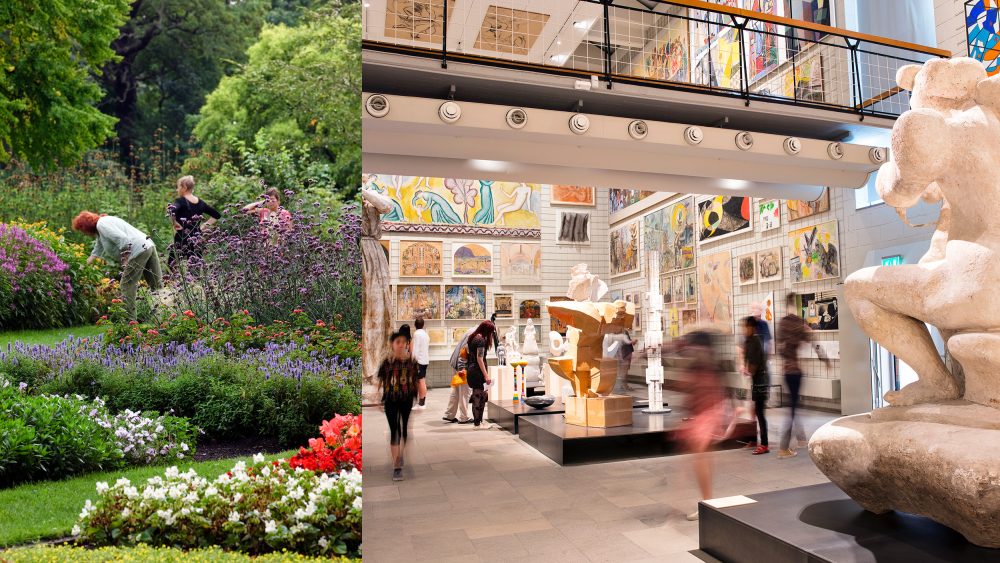
A composite image showing the Botanical Gardens on the left and Skissernas museum on the right.

Lund University’s Cultural Forum for Art and Science has, for the second time, awarded seed funding to teachers and researchers who wish to integrate artistic perspectives into their work. Here is a blog post from one of the projects that received funding in the latest round.

Art Galleries, Public Gardens, and Place-Based Creative Writing: A Collaboration between Lund University and Edinburgh Napier University

Place-based creative writing invites students to write from their lived experience of place, engaging with the communities and environments in which they are situated, both indoors and outdoors. Place-based education is a form of educational practice that moves teaching and learning beyond traditional classroom settings and emphasises the connection between learning and the embodied experience of being in a physical space (Gruenewald & Smith, 2014). Previous research has also shown that grounding climate discussions in local environments helps to improve climate understanding. In this collaborative project, researchers at Lund and Edinburgh aim to explore the role of creative writing and literary studies in place-based education, asking how creative writing activities might further deepen our engagement both with art objects indoors and with plants outdoors. Together, Barbara Barrow (Associate Professor, English Studies, Lund) and Ellen Turner (Associate Professor, English Studies, Lund) will develop and lead place-based creative writing activities for English literature and teacher training students at Lund’s Skissernas Museum and Botanic Gardens, while Sam Illingworth (Professor of Creative Pedagogies, Edinburgh Napier University) will lead parallel excursions with students to Edinburgh’s Scottish National Gallery of Modern Art and Royal Botanic Garden. These activities will invite students to read and reflect on selected examples of contemporary, published writing about gallery spaces and public gardens, to visit those spaces, and to respond to them through their own original creative writing.

Our aim in leading these activities is to incorporate local arts and cultural institutions into our literature classrooms, while also fostering students’ creativity through prompts that invite reflection on their encounters with specific plants, design elements, and art objects in gardens and galleries. In taking up these activities, we hope to explore how place-based education can enhance our discussions of literature about visual art by contemporary authors like Zadie Smith and Nick Hornby. In the art galleries, students will read both Smith and Hornby and then spend some time describing and writing about an art object of their choice. We are also very interested in how outdoor excursions to natural spaces might contribute to the goals of sustainability education; to investigate this, we will invite students to engage with Louise Glück’s Pulitzer Prize-winning poetry collection, The Wild Iris (1992), in public garden spaces, and to compose and share their own poems. This work, we hope, will contribute to scholarship on the role of creative writing and literature in place-based education and sustainability education.

Barbara Barrow, Associate Professor in English Studies at the Centre for Languages and Literature, Lund University
Ellen Turner, Associate Professor in English Studies at the Centre for Languages and Literature, Lund University

References:
Gruenewald, D. A., & Smith, G. A. (Eds.). (2014). Place-based education in the global age: Local diversity. Routledge

2 October 2026

This entry was posted in

Okategoriserade

Comments

0 Comments Leave a comment

Artists in residence at MAX IV

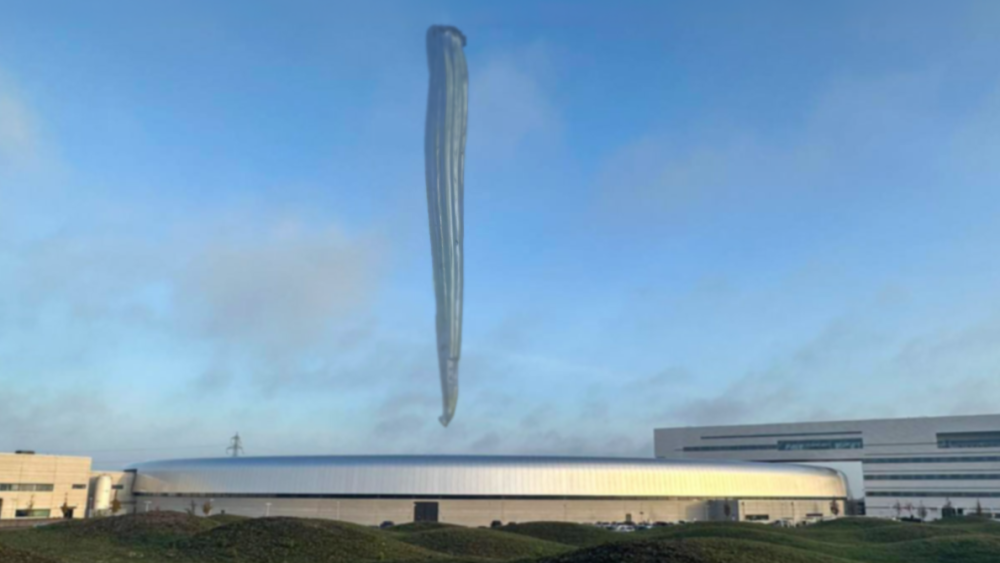
Picture Augmentet Reality MAXIV

During 2026, Jennifer Rainsford has been working, and still works, as an artist in residence at MAX IV, bringing artistic perspectives to the advanced synchrotron light facility there. Researchers at MAX IV use this extremely intense light to investigate structures that are invisible to the human eye. In collaboration with the researchers, Jennifer Rainsford has used the beamlines to create monoliths using seeds, both in a video installation and as an augmented reality (AR) experience accessible via a mobile phone. You can experience it for yourself via the link below.

Now three new artists have been selected for the 2026 MAX IV art residencies in time-based media, the second of two calls made possible by the generous funding Lund University received from Gyllenstiernska Krapperup Foundation. By making room for dialogue between scientists, artists, and finally the public, the residency aims to enrich and expand perspectives and understanding of the groundbreaking research conducted at MAX IV while also spotlighting Lund University as Sweden’s leading cultural university. The call was limited to professional artists working with durational works of art, including sound art, dance, music, and performance arts, or interactive, algorithmic and kinetic art.

From 54 entries received from across the Nordic region, the jury selected artists Jacek Smolicki, Elise Arvefjörd and Louise Kvarby. The selected artists will create art in direct contact with the research environment at MAX IV and will have access to the Inter Arts Center of Lund University during their 8-week residencies.

Jacek Smolicki is an artist, designer, and researcher working at the intersection of sound art, sound studies, environmental humanities, and media technologies. Smolicki holds a PhD from Malmö University and has held academic positions at Simon Fraser University, Linköping University, and Uppsala University. He was a postdoctoral researcher funded by the Swedish Research Council, a Fulbright Visiting Scholar at Harvard, and a 2026 Loeb and ArtLab Fellow at the Harvard Graduate School of Design. At MAX IV, he is interested in pursuing artistic research to explore the diverse ways that sound affects the material dimensions of the surrounding world.

Elise Arvefjörd is a sound artist and composer with a background in the performing arts. Her practice explores the materiality of sound and the relationships between body, matter, and the production of knowledge.  She has previously collaborated with researchers at the Swedish Museum of Natural History and the bioremediation company Mycomine on a project where laboratory methods became part of the artistic process. She is joined by co-applicant Anna Öberg, a dancer and choreographer with roots in Swedish folk dance. Anna Öberg holds an MFA in choreography and has created and performed in venues both nationally and abroad. Together, the artists will investigate how scientific knowledge moves between matter, instruments, data, and people at MAX IV– and what happens when this chain extends into artistic, bodily, and auditory practices.

Louise Kvarby is a choreographer working with film and video. She holds master’s degrees in Filmic Process, and in Stage and Media, and has studied dance at the Stockholm Academy of Ballet. She is the founder and leader of Transforma, where she works as a choreographer, dancer and producer for dance and film projects. Her practice is in the intersection of dance/choreography/performance and film, and she has addressed the themes of science and research, including a previous collaboration with a programmer, dancers and interactive projections. At MAX IV, she will be investigating ways to translate research into movement through a choreography of bodies, light design, poetry, music and video.

Ann Kristin Wallengren, Pro Vice-Chancellor for Culture and Pedagogical Development
Heidi LaGrasta, Outreach Officer, MAX IV Laboratory

 Link to Jennifer Rainsford’s work  https://reciprocalseed.cargo.site/

Interview with Jennifer Rainsford in Curie magazine (in Swedish) https://www.tidningencurie.se/nyheter/konstnar-tar-plats-bland-forskarna-pa-max-iv

23 September 2026

This entry was posted in

Okategoriserade

Comments

0 Comments Leave a comment

Culture in Almedalen

Almedalsparken in Visby, the pond at sunset

Every June, Almedalen Week in Visby brings together politicians, business leaders, academics, local and regional officials, trade unions and many others. Cultural perspectives are also given a great deal of attention, and in recent years many of these have been brought together under the umbrella of ‘Culture in Almedalen’. This year, 2026, the programme was expanded due to its popularity with the public. The panels focus primarily on cultural policy, and examples of topics discussed included this year’s culture barometer (Swedes’ views on cultural provision), the significance of cultural and creative industries for the economy, and a discussion with local authority representatives from areas investing most heavily in culture (Malmö, Umeå, Västra Götaland), and on broadening funding – including how to attract donors to the public cultural sector, which is high on Culture Minister Parisa Liljestrand’s agenda. The programme was extensive, and one of the sessions I attended was entitled ‘Kulturriket 3.0 – a visionary cultural policy for a new era’, featuring, amongst others, Mikael Brännvall, CEO of Svensk Scenkonst, and Gunnar Ardelius, Secretary-General of the Swedish Museums Association. Their discussion was based on the premise that culture must be the foundation of a society, and it is, of course, a recurring theme that culture is crucial to a democratic society. But what does that actually mean? It can be useful to return to this point so as not to lose sight of the bigger picture, and that is precisely what the panellists did. They emphasised that it is through culture that we can engage with others’ views and experience other people’s worlds. And it is true that, through art, understanding reaches a different level – it becomes more engaging and empathetic. Art and culture are also significant for understanding the present day, and it is there that one can also explore alternative ways of thinking; this is, in fact, an important avenue for social analysis and social criticism. The philosopher and Honorary Doctor at LU, Jonna Bornemark, writes in her book The Renaissance of the Immeasurable (available only in Swedish) about art as a foundation: “Artistic expression is sometimes perceived as entertainment and as the icing on the cake in a dreary everyday life. But given art’s ability to capture the ‘what-ness’ of things, to engage with the unknown and thereby also to reshape our established categories, it is rather the plate on which the porridge sits.” (translation by DeepL)

This was also the theme of the discussion I took part in, organised by Folkuniversitetet and the University of Gothenburg together with the university’s Pro Vice-Chancellor, Pauli Kortteinen; Anna Ekström, former Minister for Education and now Chair of the Association of Folk High Schools; and Sverker Sörlin, Professor of Environmental History at KTH and Chair of Folkuniversitetet. We discussed the value of culture based on the programme description, which read: “What place should art and culture have in a society where economic benefit has become the dominant measure of value? How do we understand the role of culture in education, democracy and people’s existential needs?”.

It was a privilege to discuss these issues with such a knowledgeable and engaged panel, and the turnout was actually very large. This was also true of the other cultural panels I attended, which shows that cultural issues are high on the agenda at Almedalen. Their number has grown every year, and I believe they will feature even more prominently in next year’s programme. It’s well worth travelling to Almedalen to promote the value of culture!

Anki Wallengren
Pro Vice-Chancellor for Culture and Educational Development

P.S. On Wednesday 2 December, the Cultural Forum for Art and Science and the Sustainability Forum at Lund University are organising an afternoon event on the importance of art and culture for a sustainable future, focusing on their ability to foster understanding, inspire engagement and offer new perspectives.

The programme will be updated in early November, but please do save the date now. Read more in the university calendar (in Swedish): Konsten att skapa framtiden: om kulturens betydelse för en hållbar framtid.

31 August 2026

This entry was posted in

Okategoriserade

Comments

0 Comments Leave a comment

Call for Seed Funding – Three Projects Receive Funding

Piles of coins with small plants growing in them.

Three projects at Lund University have been awarded funding to explore collaboration between art, culture and education and research.

LU’s strategy for cultural collaboration supports staff in their efforts to use artistic and cultural means to help create, bring to life and deepen scientific knowledge. Innovative teaching methods, pioneering collaborations between researchers, artists and cultural institutions, and stimulating encounters between artistic and scientific forms of knowledge are some of the areas that researchers and teachers at LU are encouraged to develop.

And there is great interest! In early spring, funding was announced through LU Cultural Forum to support such work. 16 interesting applications were received, and they were well distributed across various faculties, and involved partners both locally and internationally. It is so heartening and exciting that there is such great interest in this type of innovation and collaboration. The following three were awarded funding:

Service Managemnet/Mathematics:  Approaching a Place: Spatial Drawing as a Pedagogical Method. 150,000 SEK.

Centre for Language and Literature/English:  Art Galleries, Public Gardens, and Place-Based Creative Writing: A Collaboration between Lund University and Edinburgh Napier University. 60,000 SEK

Sociology of Law/Theatre Academy:  Stories for the Future. Painting workshops and community theatre. SEK 150,000

Congratulations to the three who received funding, and congratulations also to the others for their interesting applications. We wish we had funding for everyone!

Anki Wallengren
Pro Vice-Chancellor for Culture and Educational Development

The steering group for cultural collaboration comprises:

  • Ann Kristin Wallengren, Pro Vice-Chancellor, Chair
  • Staffan Storm, Deputy dean, Faculty of Fine and Performing Arts
  • Johannes Persson, Dean, Faculties of Humanities and Theology
  • Per-Johan Dahl, Head of Department, Department of Architecture and Built Environment, LTH
  • Annie Lindberg, Director of Museum of artistic process and public art, LUKOM
  • Jenny Hallström, Head of the Public Services Department, University Library
  • Åsa Berglund, Head of division, Legal and Records Management

12 June 2026

This entry was posted in

Okategoriserade

Comments

0 Comments Leave a comment

Using Art in Education

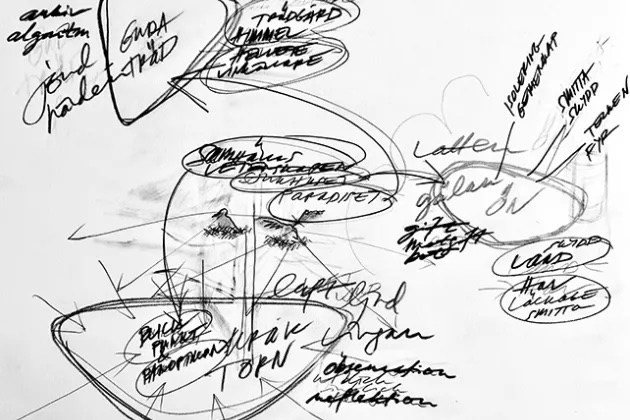
Mind map by Loulou Cherinet

Lund University’s cultural strategy highlights that art, and culture should be integrated into teaching and education. How can this be done? One approach is to work with object-based learning (OBL), a method that the educators at the Museum of Artistic Process and Public Art have further developed based on courses they have taken at Oxford University and in collaboration with international universities. The Botanical Garden and the Historical Museum are also in the process of starting similar work.

Object-based learning is, in short, a pedagogical approach based on student-centered learning that promotes deeper understanding by engaging multiple senses. Museum and archival objects are used as a way to broaden perspectives and provide new entry points to theoretical concepts.

The educators at the Museum of Artistic Process and Public Art have collaborated with teachers from most faculties using this pedagogy, and the results have been consistent—the method is very popular among students and contributes to broader learning, real-world relevance, and much more.

For those who are curious to see some results of this type of teaching, the Museum of Artistic Process and Public Art can be visited this May. Between May 22–24, students from the Academy of Music will present how they have used materials from the museum and further developed sketches into other art forms in the course Plastic Extension of Music. One of the teachers who has worked extensively with OBL is Ulrika Wennersten, Vice Dean at EHL and also a lawyer. Law students’ work with OBL will be presented in a number of presentations at Skissernas Museum on Wednesday, June 3, between 9 a.m. and 12 p.m., under the title Art, Conflict, and Infringement.

These are a few inspirational examples of how art can be used and integrated into education. Next year, a pedagogical course on how to integrate art into teaching will be offered, information about that will come in due course.

If you have noticed that a number of new art installations have appeared on campus recently, it is due to the Swedish Public Art Agency (Statens konstråd), which, in collaboration with Akademiska Hus, has a mandate to work with, among other things, campuses at Swedish higher education institutions. Lund University has received several fantastic artworks and installations as part of this initiative, and one such project is currently taking place on the Faculty of Social Sciences campus. The collaboration between the faculty and the Public Art Agency will also be discussed in a talk at the Museum of Artistic Process and Public Art on Thursday, May 28, between 5–7 p.m., under the title Shaping Shared Spaces – Public Art Between Idea, Site, and Practice at Kv. Paradis, Lund University Campus. There is a great deal of exciting work underway at the intersection of art and our core activities!

In the calendar, you can find all events at the intersection of art, culture, and science (in Swedish).

Ann Kristin Wallengren
Pro Vice-Chancellor for Culture and Pedagogical Development

20 May 2026

This entry was posted in

Okategoriserade

Comments

0 Comments Leave a comment

Seed Funding That Has Enabled New Ways of Exploring

A hand with a plant growing out of a pile of coins.

In 2025, Lund University’s Cultural Forum for Art and Science awarded so-called seed funding to projects that integrate culture into education, teaching, or research. The initiative aimed to enable staff at the University’s faculties to initiate or further develop collaboration in these areas. The four projects that received funding were given the opportunity to explore new approaches to knowledge development, pedagogy, and collaboration. The result is an impressive range of initiatives in which artistic methods are used to make complex research more accessible, engaging, and relevant—both within and beyond academia. All projects have now been completed and reported.

One of the projects, The Physics of Opera, brings together seemingly disparate worlds by combining opera with advanced physics. Through concerts, workshops, and public presentations, the project has not only sparked interest in atom physics but also created new collaborations between artistic and technical environments. It demonstrates how aesthetic forms of expression can open doors to subjects that are otherwise perceived as difficult to access.

In the project Art of Air, sound is used as a tool for understanding. By transforming research data on air pollution into sound—a process known as sonification—audiences are able to experience environmental issues in an entirely new way. A key outcome of the project is that it has shown how connections between scientific research and art can gain greater official recognition and visibility.

A third project, Clear Lines of Criminology, used comic art to explain central concepts in criminology. The result is an accessible and pedagogical publication that not only enhances student learning but also demonstrates how visual storytelling can contribute to critical reflection and deeper understanding.

The fourth project has developed a course for teachers and researchers who wish to use artistic methods in their teaching and research. The course offers a concrete model for how aesthetic perspectives can become a natural part of higher education. It also showed how artistic practice can contribute to learning, research, and sustainability work, and is now proposed as a professional development course for the entire University.

Collectively, these initiatives demonstrate how relatively small resources can serve as a powerful catalyst for innovative ways of working. The seed funding has led not only to publications, courses, and artistic works, but also to new collaborations and continued funding. Perhaps most importantly, the projects highlight the role of culture as an integral part of the University’s core activities.

At the time of writing, applications have been received for the second call for seed funding. Decisions on which applications will be awarded funding will be made on 28 May 2026.

Charlotta Sokulski Bateld
Cultural Coordinator

12 May 2026

This entry was posted in

Okategoriserade

Comments

0 Comments Leave a comment

Welcome to the blog of Lund University’s Cultural Forum for Art and Science!

Performance at Skissernas Museum

In connection with the launch of new web pages for the University’s arts and cultural activities, we are pleased to introduce the Culture Blog. The blog will be published approximately once a week and will cover a wide range of topics related to work with art and culture at Lund University: how teachers integrate art and culture into their teaching, how researchers collaborate with artists to broaden and deepen their perspectives, what cultural infrastructures exist at LU, events in art and culture, insights into our collections, and much more. The blog will be written by a range of contributors, including communications staff, teachers, coordinators, and others.

The two new web pages on lu.se can be found under “About the University,” under “The University at a glance/Mission, vision and values/The arts, culture and science in collaboration” and “Visit the University/Experience the University”, respectively. These pages present the various activities that encompass art and culture.
“Cultural Forum for Art and Science” on the University Staff Pages is updated but currently only available in Swedish (an English version will be published at a later stage). Here, we will regularly publish links to documents such as our current cultural strategy and the upcoming one, videos from workshops on art and culture in teaching and research, as well as information about our network for collections and documentation, including examples of how teachers and researchers work with art and culture. We look forward to sharing the exciting and inspiring work at Lund University that in various ways connects to art and culture.

Ann Kristin Wallengren
Vice-Rector for Culture and Pedagogical Development

7 May 2026

This entry was posted in

Okategoriserade

Comments

0 Comments Leave a comment