
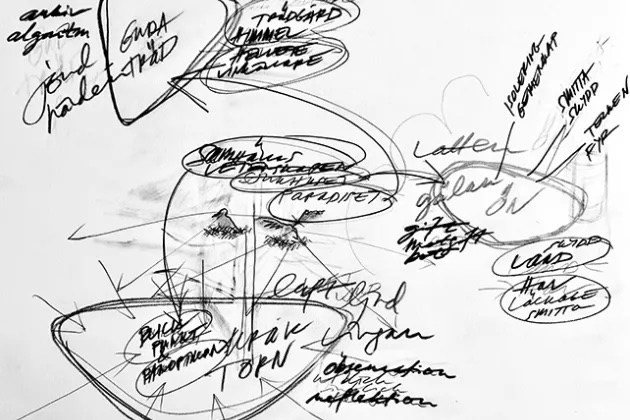
Lund University’s cultural strategy highlights that art, and culture should be integrated into teaching and education. How can this be done? One approach is to work with object-based learning (OBL), a method that the educators at the Museum of Artistic Process and Public Art have further developed based on courses they have taken at Oxford University and in collaboration with international universities. The Botanical Garden and the Historical Museum are also in the process of starting similar work.
Object-based learning is, in short, a pedagogical approach based on student-centered learning that promotes deeper understanding by engaging multiple senses. Museum and archival objects are used as a way to broaden perspectives and provide new entry points to theoretical concepts.
The educators at the Museum of Artistic Process and Public Art have collaborated with teachers from most faculties using this pedagogy, and the results have been consistent—the method is very popular among students and contributes to broader learning, real-world relevance, and much more.
For those who are curious to see some results of this type of teaching, the Museum of Artistic Process and Public Art can be visited this May. Between May 22–24, students from the Academy of Music will present how they have used materials from the museum and further developed sketches into other art forms in the course Plastic Extension of Music. One of the teachers who has worked extensively with OBL is Ulrika Wennersten, Vice Dean at EHL and also a lawyer. Law students’ work with OBL will be presented in a number of presentations at Skissernas Museum on Wednesday, June 3, between 9 a.m. and 12 p.m., under the title Art, Conflict, and Infringement.
These are a few inspirational examples of how art can be used and integrated into education. Next year, a pedagogical course on how to integrate art into teaching will be offered, information about that will come in due course.
If you have noticed that a number of new art installations have appeared on campus recently, it is due to the Swedish Public Art Agency (Statens konstråd), which, in collaboration with Akademiska Hus, has a mandate to work with, among other things, campuses at Swedish higher education institutions. Lund University has received several fantastic artworks and installations as part of this initiative, and one such project is currently taking place on the Faculty of Social Sciences campus. The collaboration between the faculty and the Public Art Agency will also be discussed in a talk at the Museum of Artistic Process and Public Art on Thursday, May 28, between 5–7 p.m., under the title Shaping Shared Spaces – Public Art Between Idea, Site, and Practice at Kv. Paradis, Lund University Campus. There is a great deal of exciting work underway at the intersection of art and our core activities!
In the calendar, you can find all events at the intersection of art, culture, and science (in Swedish).
Ann Kristin Wallengren
Pro Vice-Chancellor for Culture and Pedagogical Development
